
Conveyor Drum Pulley for belt conveyor

Drum Pulleys for every function
ALTEMA, a French manufacturer based in Mouilleron-Saint-Germain in the Vendée region since 1995, designs and manufactures custom conveyor pulleys for industrial applications. Its range includes standard, large diameter and special pulleys made from steel or stainless steel, supplied unlagged or with rubber lagging. Each configuration is tailored to the requirements of the application.
As part of FIDEIP, an industrial group based in the Vendée region of France, ALTEMA supports operators of facilities equipped with belt conveyors, as well as conveyor manufacturers looking to outsource pulley production. Its pulleys meet the requirements of both standard conveyors and heavy duty conveying systems, including those used in mines, quarries, ports, sorting facilities and bulk material handling operations.
With over 30 years of experience and modern production facilities, ALTEMA manufactures conveyor drums for every function: drive pulleys, take-up pulleys, tail pulleys, snub pulleys and gravity take-up pulleys. Available options include steel or stainless steel construction, lagged or unlagged surfaces, and cylindrical or double-tapered profiles. ALTEMA’s teams define the technical solution best suited to your installation’s requirements.
Conveyor pulleys of all dimensions
ALTEMA manufactures conveyor pulleys with welded shells in diameters from 88 to 1,300 mm and shafts up to 6 metres long. Standard pulleys range from 88 to 600 mm in diameter. Larger pulleys, up to 1,300 mm in diameter, are used in bulk material handling and high-capacity conveying systems, while special pulleys are manufactured to drawings to meet specific application requirements.
Each drum can be fitted with the type of shaft-to-flange connection best suited to the application: removable tapered hubs, UCFC surface-mounted bearings or clamping rings.
With over 10,000 conveyor pulleys manufactured each year, ALTEMA is a trusted partner for industries using belt conveyors. The company supports its customers at every stage of the project to specify a reliable pulley that meets the safety requirements of their installation.
Need for
Technical advice?
Call our drum experts
A range of drum pulleys for all sectors of activity
ALTEMA's experience enables us to meet both classic conveyor pulley and handling drum pulley requirements, as well as more specific needs in all sectors of activity: mining, quarrying, recycling, fertilizers, ports, food processing.
+10,000 Drum pulleys per year
+10 Business sectors
+500 satisfied customers
Do you already have the dimensions of your drum pulley ? Send us your pre-filled request for a quick quotation using ALTEMA drawings.
Simplfied drawing of a belt conveyor
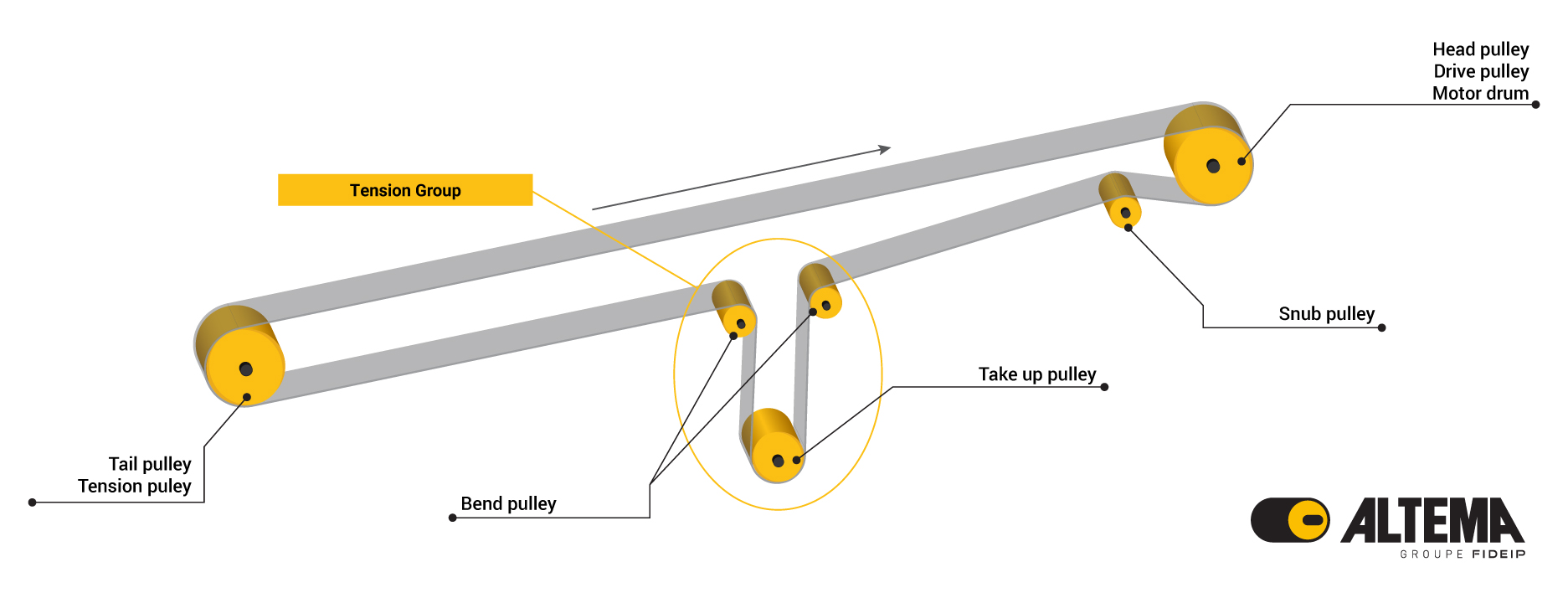
Which pulley is used for which function on a belt conveyor?
A belt conveyor can incorporate up to five types of pulley, each with a specific function and position along the belt path. The diagram below shows their locations. ALTEMA manufactures all five types to suit the dimensions of your installation.

tail pulley
The tail pulley, also known as the return pulley, redirects the belt at the end opposite the drive. It ensures accurate belt tracking and helps maintain the correct tension, reducing the risk of premature wear.

Head pulley
The drive pulley, typically positioned at the head of the conveyor, sets the belt in motion. ALTEMA offers a range of lagging options to improve traction between the pulley and the belt and reduce wear.

Snub pulley
The snub pulley increases the belt wrap angle around the adjacent pulley, improving contact between the belt and the pulley. This helps ensure effective traction and maintain stable belt tension.

Take up pulley
The take-up pulley is used to adjust the belt tension based on the load being transported. This ensures smooth conveyor operation and helps prevent breakdowns caused by improper tension.
How should you choose your drum for a conveyor?
The selection of a drum for a conveyor is based on six key criteria:
- the pulley’s function on the conveyor: drive, tail, snub, gravity take-up or bend;
- diameter and dimensions: from 88 to 600 mm in diameter for standard applications and up to 1,300 mm for high-capacity conveying systems, with a shaft length suited to your conveyor frame;
- the material: steel for most of the applications, stainless steel where the environment or the product being transported requires it;
- lagging: an unlagged pulley or rubber lagging selected according to the required traction and operating environment;
- shaft-to-end-disc connections and bearing units: keyless locking assemblies, removable hubs, UCFC piloted flange bearing units or welded connections;
- the operating environment: humidity, mud, abrasion, dust, seaside environment, high temperatures.
The exact specifications (diameter, shaft length, lagging type, bearing units and material) are tailored to your installation, the material being conveyed and the operating conditions, based on the load data you provide.
Lagging for conveyor take up drum pulley
In order to ensure better adhesion and protect the conveyor belt, Altema has developed, over more than thirty years of manufacturing, comprehensive expertise in coating: coating profile, application technology and drum pulley preparation, which is systematically shot-blasted prior to coating to ensure optimum rubber adhesion.
The coatings offered range from smooth rubber to ceramic coating, including various products such as diamond-patterned ISO 284/340, and many other options. Our solutions ensure increased durability and a long service life for conveyor drums. Depending on your needs, we also use cold bonding or hot vulcanization techniques to guarantee optimal adhesion of the coating

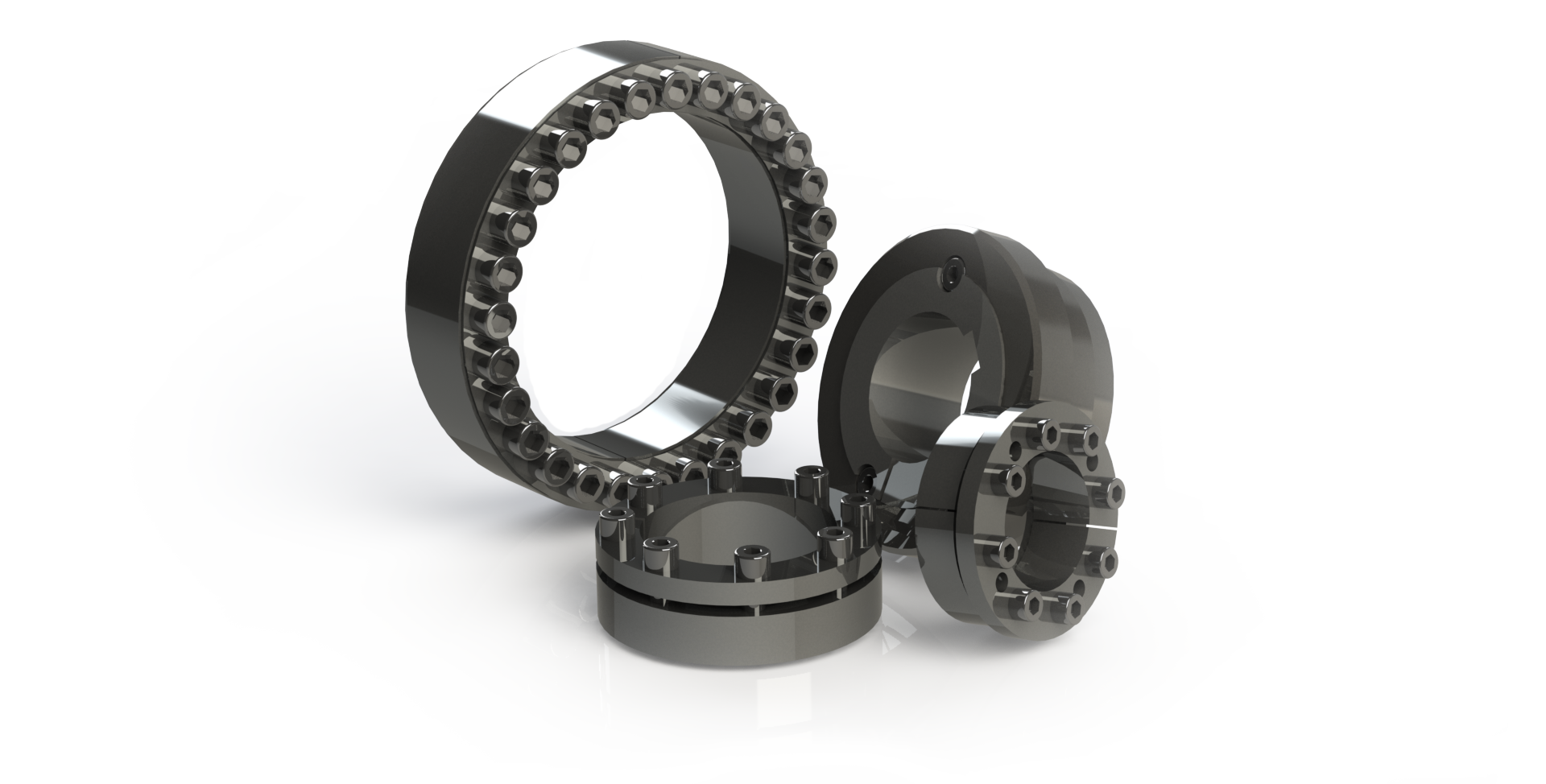
Shaft coupling systems for conveyor belt drum
The connection between the drum and its shaft determines the robustness of the conveyor system conveyor. Altema offers several options: removable VECOBLOC hubs, clamping rings, UCFC-type surface-mounted bearings or welded connections to flanges.
Clamping elements
Keyless locking assemblies use tapered components to generate radial clamping pressure. Tightening the screws moves these components axially, creating a secure frictional connection between the pulley and the shaft. This mechanism eliminates backlash and distributes the load evenly around the shaft’s circumference, helping to reduce wear and extend component service life.
Universal hubs type VECOBLOC
VECOBLOC removable hubs, also known as TAPERLOCK, are detachable connections that allow a conveyor belt drum to be fixed to its shaft without the need for specific tools. This system provides a good alternative to clamping elements for users who wish to maintain a keyed connection. The advantage of this coupling system is the wide range of models available to suit various industrial applications.
Why choose ALTEMA for your conveyor drum pulleys?
ALTEMA stands out for its technical expertise, personalized support, and the quality of its products. Our custom solutions and commitment to our clients allow us to position ourselves as a reliable partner for the manufacturing of your conveyor or elevator drum pulleys.
Technical support in defining your products
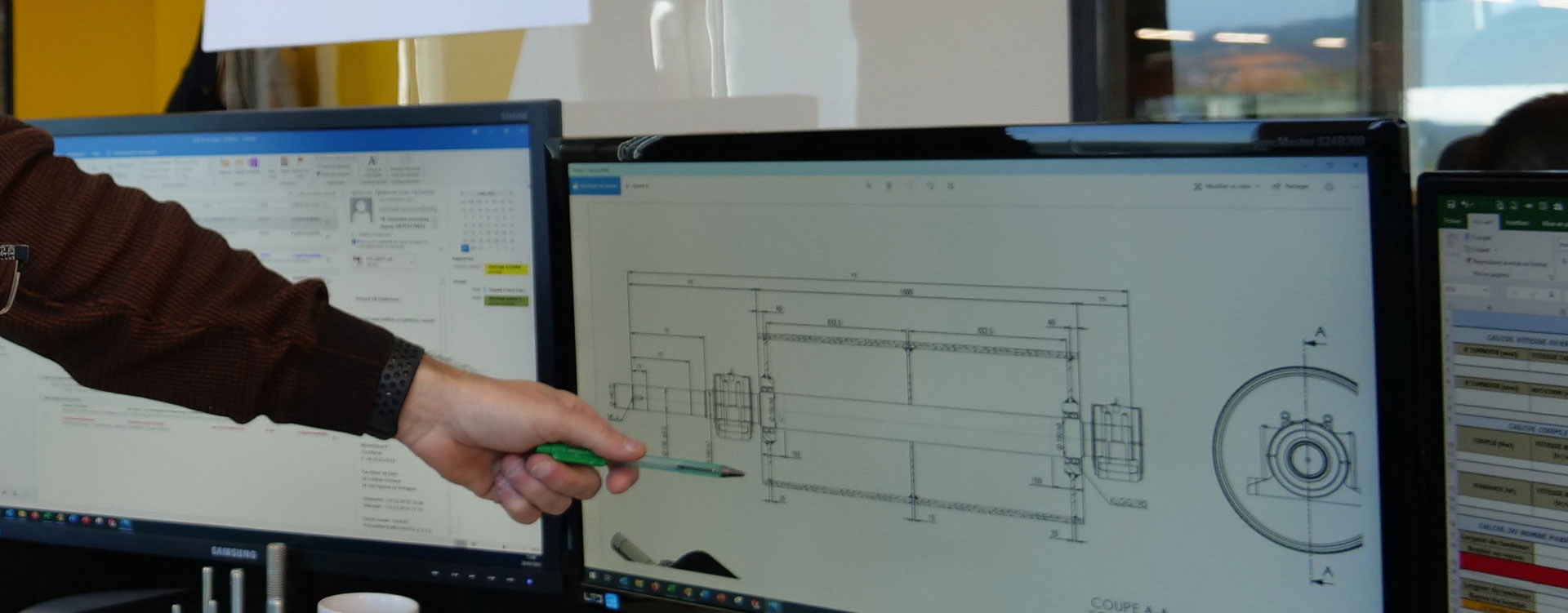
Since 1995, ALTEMA has manufactured hundreds of thousands of pulleys for industrial, quarrying, mining and other material handling applications. Its in-house engineering department and technical teams oversee every stage, from design and precise pulley sizing using advanced 3D CAD software through to production. This expertise enables the company to support its customers in developing solutions tailored to each installation’s configuration and technical requirements.

Quality control and compliance with standards
At ALTEMA, we are committed to providing drum pulleys with a high level of reliability. Each drum undergoes strict quality control at every stage of its manufacturing process. This allows us to validate compliance with the dimensional tolerances defined during design, guarantee high-quality drums, and ensure complete customer satisfaction.
Our production processes are not limited to quality control; they also comply with environmental and safety regulations.
Fast response with ALTEMA Express 24h in France
With our ALTEMA Express 24h service, available exclusively in France, we can manufacture and dispatch drums within extremely short lead times. This service is particularly suitable for French industrial sites that cannot afford a prolonged interruption to their production.
Do you urgently need to replace a drum with a diameter ranging from 114 to 508 mm? ALTEMA is committed to responding to your needs as quickly as possible.

Altema services
RDM DIMENSIONING
ALTEMA's Engineering Department is able to dimension and verify conveyor drum pulleys and elevator pulleys using its RDM and 3D CAD calculation software.
Static and Dynamic Balancing
ALTEMA offers balancing solutions and services for high-speed conveyor pulleys, to keep them running at peak performance.
TECHNICAL SUPPORT
Depending on the application, the field of activity, the transported material and the climatic conditions, ALTEMA offers you specific solutions to optimise your products and improve your performance.
How to prepare your project
Which rubber lining should you choose for a conveyor drum?
For non-driven pulleys, such as return and tail pulleys, smooth rubber lagging helps extend service life and reduce material build-up. In wet or muddy environments, ceramic lagging offers the highest traction.
For food processing applications, ALTEMA uses white food-grade rubber compliant with FDA requirements. Lagging is applied using cold bonding or hot vulcanisation, depending on the application. ALTEMA’s technical teams help you select the appropriate lagging for your operating conditions.
Should I choose a steel or stainless steel drum?
The choice depends on the conveyed material, the operating conditions—such as moisture, washdown and corrosive atmospheres—and the installation’s requirements. ALTEMA manufactures pulleys in both materials and can machine shafts from any steel grade to suit the loads and stresses involved.
If you are unsure, describe your application to ALTEMA’s technical team. They will advise you on the appropriate material and, where required, suitable lagging.
What information do I need to provide to get a quote for a conveyor drum?
If any information is missing, the engineering department will work with you to define it when specifying the pulley. You can request a quotation via the contact form or by calling +33 2 52 56 04 18.
How can you quickly replace a faulty conveyor drum?
Is it possible to have a drum made to a design or as an exact replica?
Is a conveyor drum supplied with its bearings already fitted?
The pulley is therefore ready to be mounted on the conveyor frame, simplifying replacement and reducing downtime.
Other configurations may include UCFC piloted flange bearing units. Depending on the installation, shaft connections can use keyless locking assemblies, VECOBLOC taper bushes or welded shaft-to-end-disc joints.